Climate & ViticultureLit by Kei Puta Te Wairau (the hole in the cloud), protected by the mountains, cooled by the ocean and crisp nights, our place is like no other.
The light here is different. So is the air. You feel it before you understand it.
From this place, our Sauvignon Blanc was defined. Pure, fresh and impossible to replicate, its intensity and clarity have rightly earned it a place on the world stage. The respect and care of our people have kept it there.
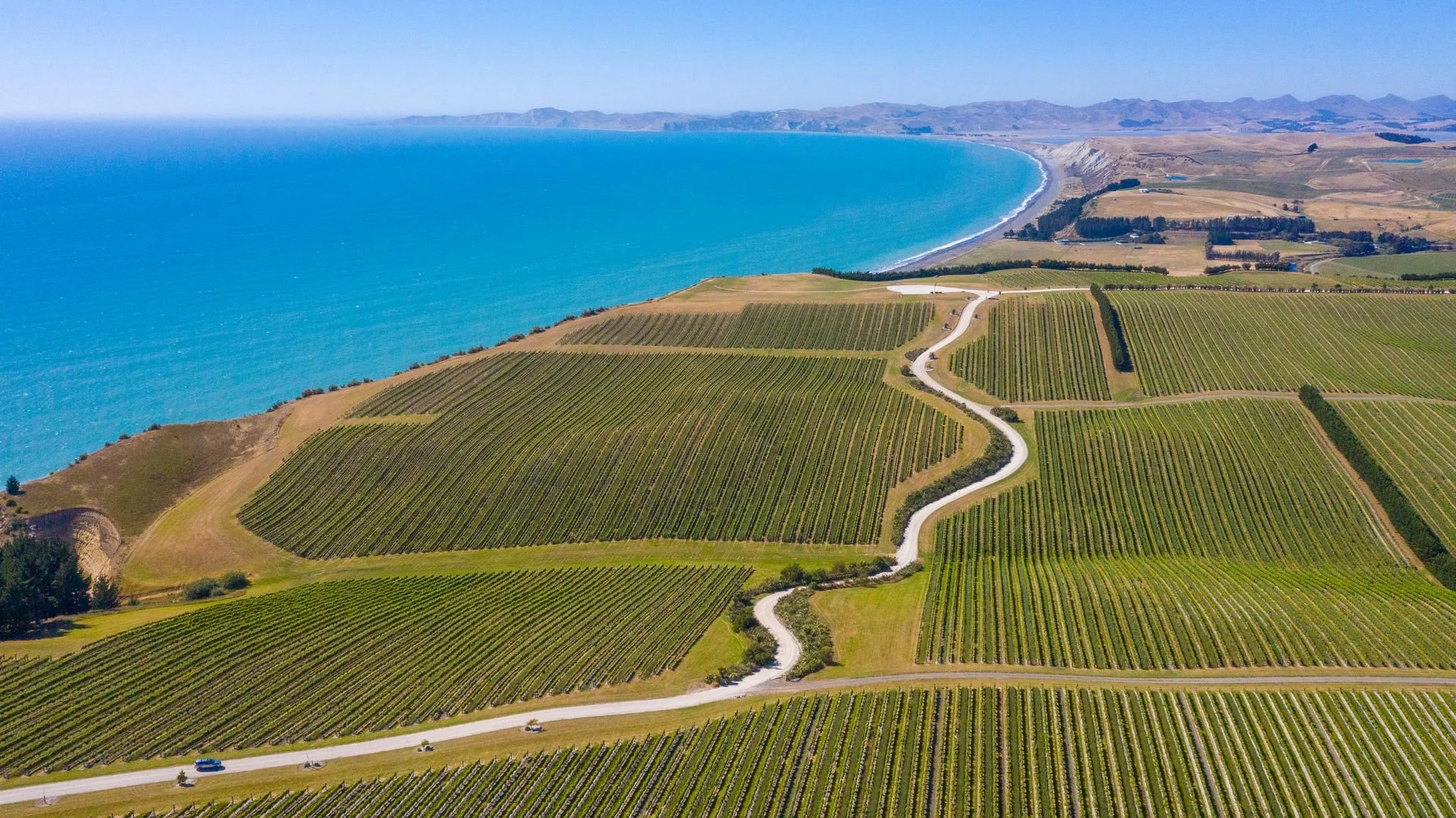
Image: MarlboroughNZ
ClimateSituated at the top of New Zealand's South Island, Marlborough is shaped by the sea on two sides - Cook Strait to the north and the Pacific Ocean to the east. The result is a maritime climate unlike any other - generous sunshine, cooling breezes and warm days that give way to crisp, cool nights.
That shift between day and night is everything. With a diurnal range of around 11 degrees through summer, acids are preserved and ripening slows - allowing fruit to develop with intensity, precision and a varietal clarity that is unmistakably Marlborough.
Protective mountain ranges shelter the region from extreme weather, while long summers create the conditions for a wide range of styles to flourish. A climate that gives generously - vintage after vintage.
-
Collection and collation of Met data is funded by the Marlborough Research Centre. Weather reports and growing degree day data can be found here.
Winepress Magazine publishes a monthly met report written by Rob Agnew from Plant & Food Research. All past issues can be found here.
-
VineFacts is an annual growing season update published by New Zealand Winegrowers that assists members by providing weekly weather data summaries for each region and seasonal phenology comparisons. To access please email vinefacts@nzwine.com.

Image: NZW, Whitehaven
2,513
AVERAGE ANNUAL SUNSHINE (HOURS)
635
AVERAGE ANNUAL RAINFALL (mm)

Image: NZW, Rapaura Springs Blind River Vineyard
ViticulturePerfectly positioned at 41.3°S — a latitudinal midpoint within the world's wine belt — Marlborough sits alongside many of the world's most celebrated wine regions. But what happens here is uniquely its own. The maritime climate and significant diurnal temperature variation slow the development of sugars, preserve natural acidity and give rise to the extraordinary varietal intensity for which Marlborough wines are renowned.
Our natural environment is a significant force in our wine. Young soils, pure air and a climate unlike any other have not only earned Marlborough Sauvignon Blanc its place on the global stage, but created the conditions for every variety grown here to carry the same quality and palpable sense of place.
We are committed to protecting it. With 97% of our producing vineyard area certified by Sustainable Winegrowing New Zealand, our care for this land is not just a promise — it is a practice. A cycle of mutual respect and stewardship that ensures what we tend today continues to give for generations to come.
In every bottle, you are transported to the place where the grapes were grown — where sun and cool fresh air, breeze and tranquility, minerality and zesty fruitiness exist in perfect balance. Where things are encouraged to happen within their own time. It is a bottled feeling that welcomes you into the region and encourages you to linger a while.
31,191
TOTAL PLANTED HECTARES
73% of the total planted and producing area of New Zealand
410,290
TOTAL PRODUCTION TONNES
Estimated production NZW 2025 Vintage Survey
79%
PROPORTION OF TOTAL NZ HARVEST (2025)
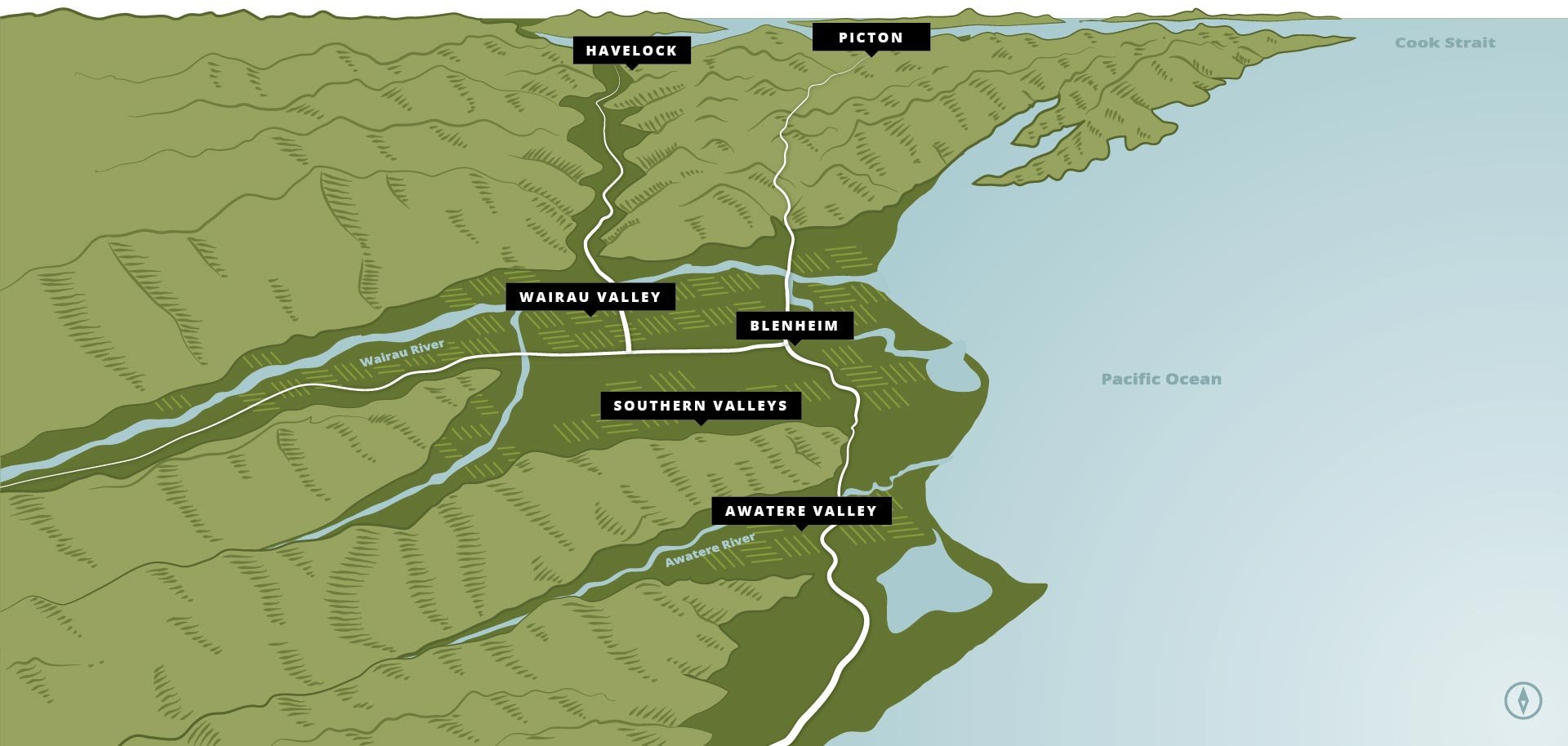
SubregionsMarlborough's wine story is told across three distinct landscapes - each one shaped by different soils, different climates and different people.

Wairau Valley
Wairau - many waters. It is a name that tells the story of this place. The braided Wairau River winds from the mountains in the west to Cloudy Bay in the east, carrying crystalline water above and below ground through the heart of Marlborough's largest and most planted valley. Sheltered by mountain ranges and lit by some of New Zealand's longest sunshine hours, this is Kei Puta Te Wairau - the place with the hole in the cloud.
The valley is a mosaic of soils and microclimates, each shaped by the river's ancient path. In the Central Wairau, around the acclaimed areas of Rapaura and Renwick, free-draining gravels and stony riverbeds produce wines of vibrant intensity. Further east in the Lower Wairau, deep alluvial silts and coastal breezes create a cooler, more maritime character. To the west, the Upper Wairau rises toward the mountains - cooler, more continental, and still revealing its potential.
Many of the families who planted here in the late 1970s and 1980s are still making wine today. Their stories are as rich as the soils beneath their vines. Sauvignon Blanc flourishes across the valley, but Chardonnay, Pinot Gris, Pinot Noir and aromatic varieties each find their place here too - shaped by the particular character of the site, the soil and the people who tend them.

Southern Valleys
The Southern Valleys - Brancott, Omaka, Fairhall, Waihopai, Ben Morven and Taylor — spread like fingers across a rolling landscape south of the Wairau Plains, covering around a fifth of Marlborough's vineyards. The soils here are older and richer in clay than the valley floor to the north, shaped by ancient glaciers and the slow work of time. It is a landscape of quiet distinction.
This is where it all began. In 1973, the first commercial vines went into the ground in Brancott Valley. Two years later, Sauvignon Blanc followed - the vines that started it all. The families and pioneers who planted here laid the foundation for everything Marlborough has become, and their legacy lives on in every vintage.
The cooler, later ripening climate and low fertility clay soils draw out wines of real restraint and elegance. Sauvignon Blanc here is more structured and textural - gooseberry, citrus and a quiet precision that lingers. On the hillsides, where soils are at their leanest, Pinot Noir finds a natural home - dark cherry, plum and a spiced earthiness that speaks unmistakably of place. Chardonnay too thrives here, producing wines of intensity and complexity. Each valley has its own character. Each site its own story.

Awatere & South
Awatere - fast flowing stream. It is a name that captures the spirit of Marlborough's most elemental subregion. Cooler, drier and windier than anywhere else in the region, this dramatic landscape stretches from the Awatere Valley south through Blind River to the rugged coastal frontier of South Marlborough - flanked by the Inland Kaikōura Range and overlooked by Mount Tapuae-o-Uenuku, Marlborough's highest peak at 2,880 metres.
Before vines arrived in the 1980s, this land formed part of vast high country stations, including Flaxbourne and Starborough. That pioneering spirit lives on in the people who chose to plant here - drawn by a place that was harder, leaner and unlike anywhere else in the region. The Awatere Fault has shaped the landscape over millennia, creating elevated terraces, dramatic white cliffs of ancient Papa rock, and a complex patchwork of loess, gravel and marine-derived soils.
The long, slow ripening season intensifies every flavour and preserves natural acidity. Sauvignon Blanc here is precise and elemental - fresh herbs, mineral tension and a briny coastal edge that speaks clearly of this place. Blind River, cooler and more exposed still, produces wines of extraordinary precision and finesse. And along the Southern Coast, where a limestone seam runs through Ward and Kēkerengū, a new chapter is quietly being written - wines of chalky texture and vibrant promise, still revealing what this untamed frontier can do.
Vintage ReportsVintage statistics can be found on the Resources Page here.